Development pass 01 · October 31, 2026
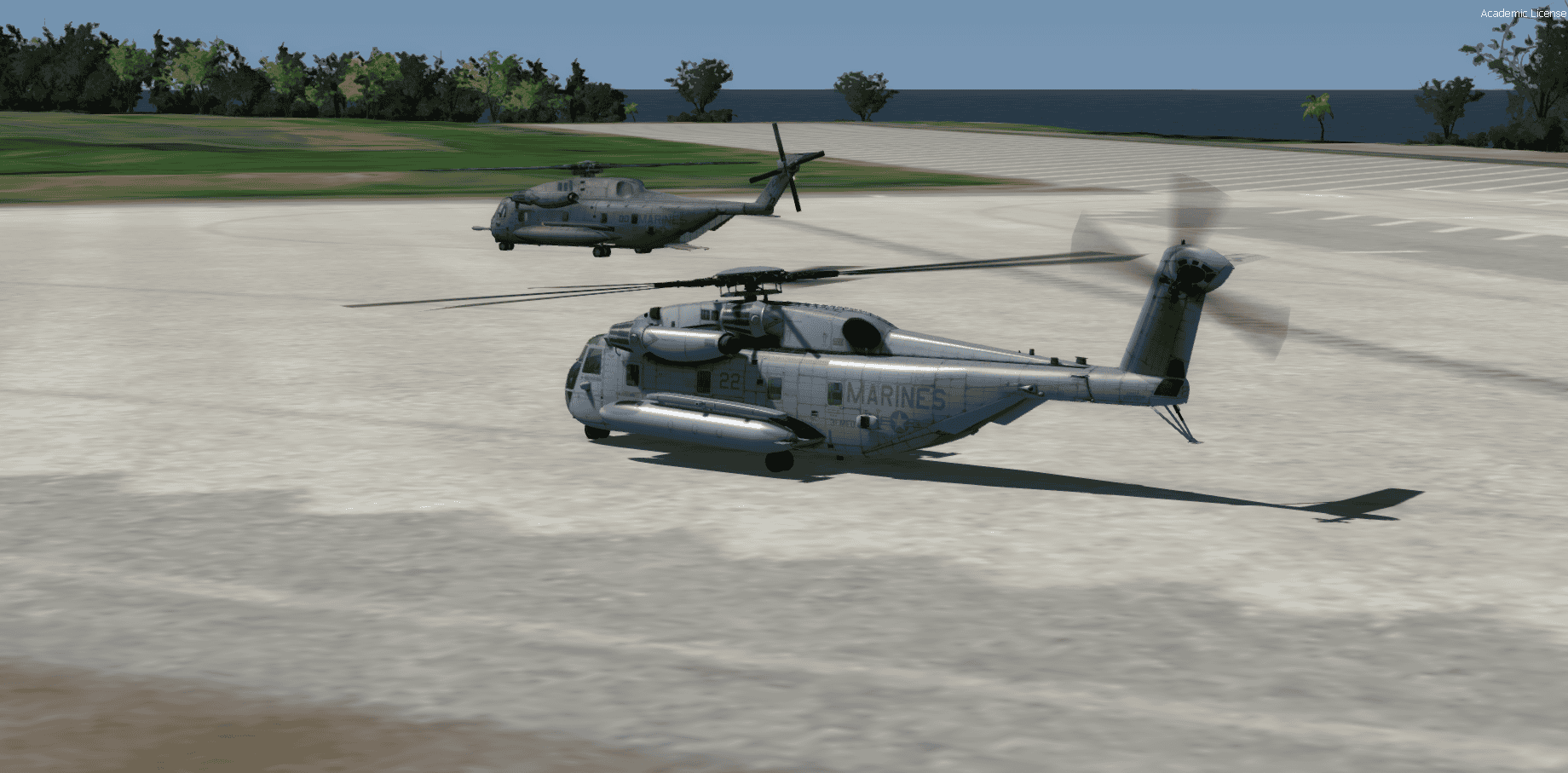
The project begins with a simple low-poly UH-1Y base, something that was initially going to be used as static model to sit on the deck of an amphibious ship, as part of our original US NAVY fleet traffic project. This is how I went about the CH-53E AI aircraft, which I now have flying in the sim.
While it looked the part resting on a ramp, it was essentially a statue—featuring no turning rotors, non-functional landing gear, and a static cargo ramp. Transforming that basic placeholder into a fully animated, operationally viable asset required a complete overhaul from the ground up.
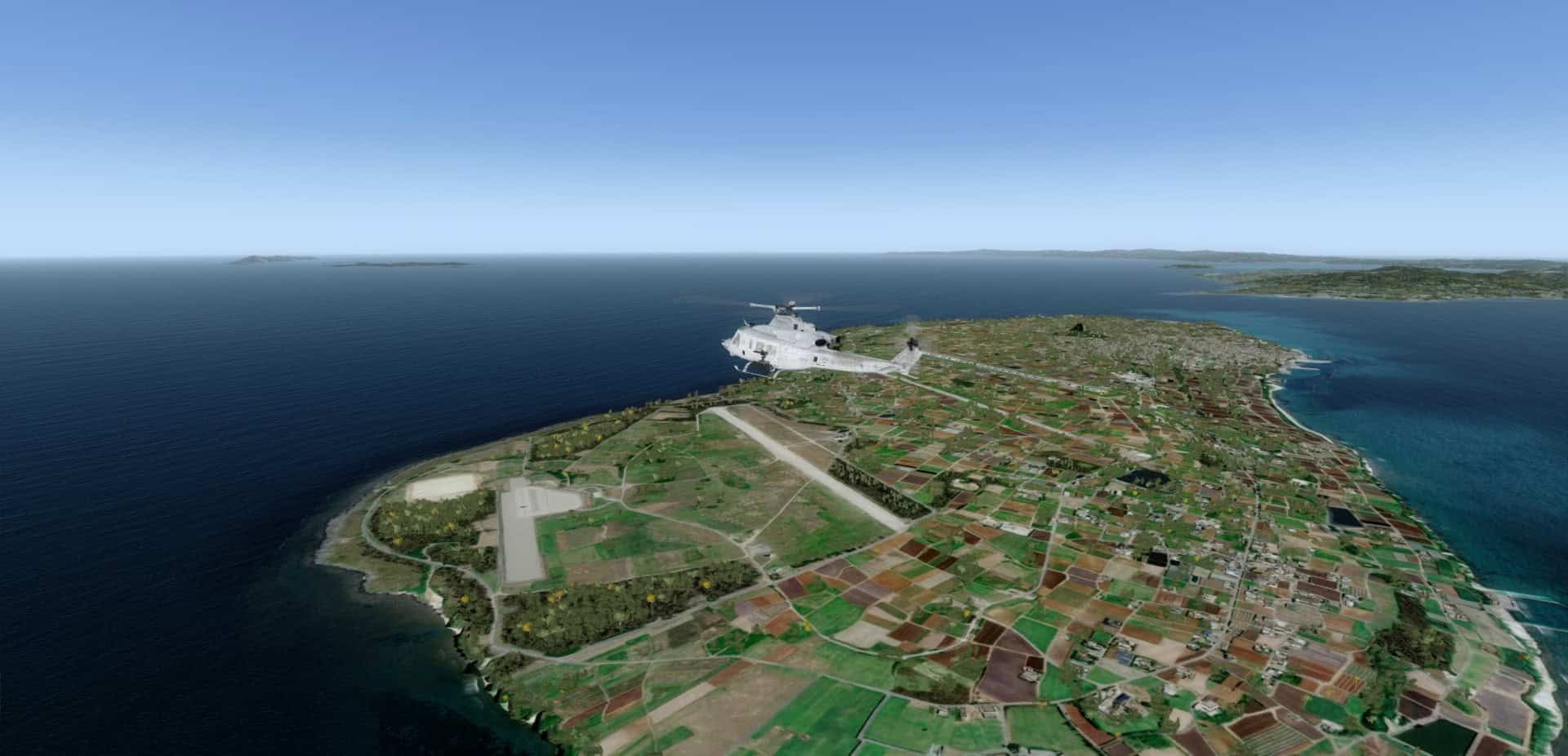
The goal is to develop it into a more detailed, flyable aircraft for Prepar3D v4 and later, with a proper UH-1Y cockpit, updated textures, working displays, opening doors and articulated gun assemblies, as well as interactive gauges that track the location of ships and make use of some other new functionality that are still in development.
So obviously we want to do our own work here. Starting from scratch is one way, and this is very close to doing that, but here we are using AI to plot the dimensions or the general shape and geometry, using existing models as a guide. I chose two older payware models that I already had in the sim hangar, and asked AI to get started plotting data. The objective is create something that is original, and not just copy parts.
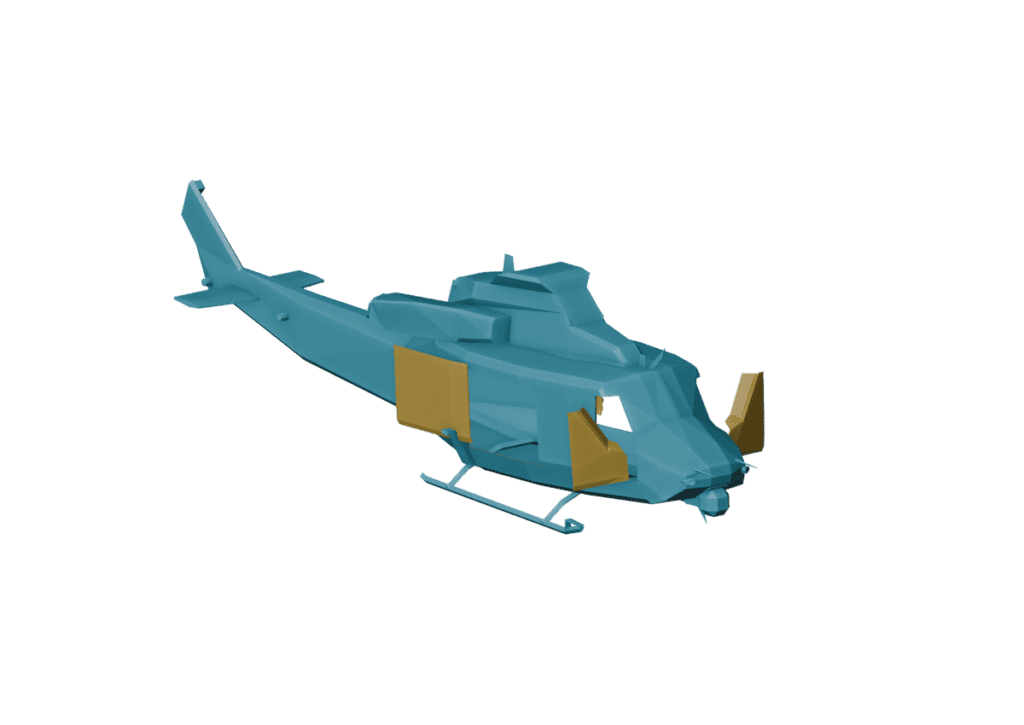
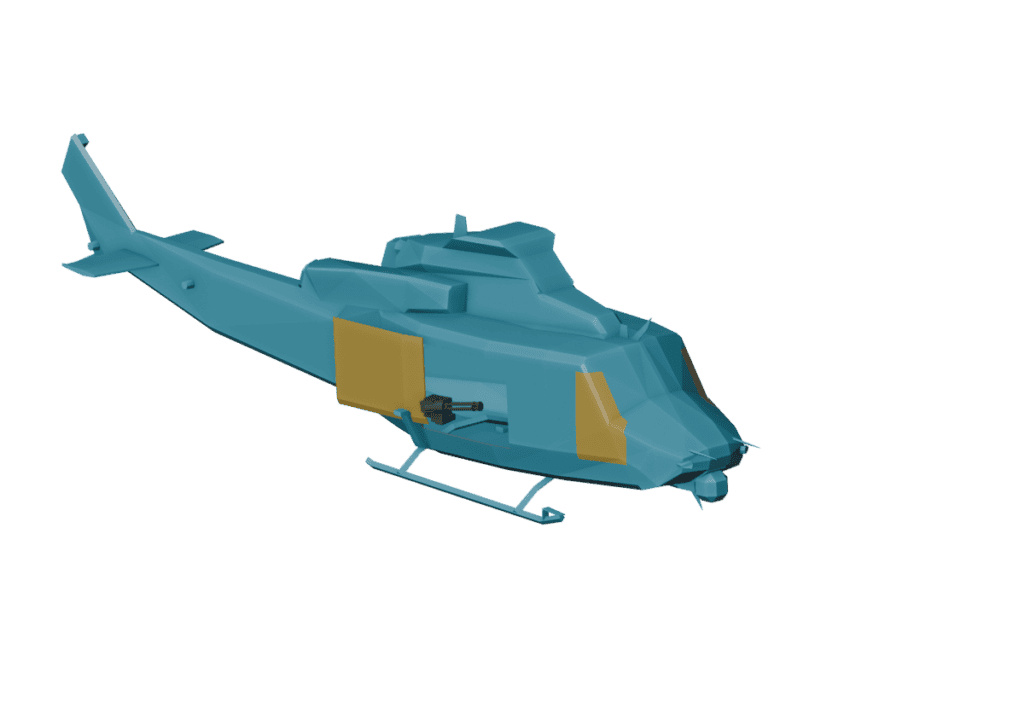
This first geometry pass establishes a repeatable comparison process, which I will touch on later. It is a development checkpoint: the aircraft is still visibly primitive, and the new door and gun work has not yet been exported to the simulator.
Choosing the references
Area 51’s UH-1Y is the main guide for the airframe’s shape and variant-specific layout. CeraSim’s unmodified Bell 412 EP provides a second reference for applicable construction and mechanical details; its fuselage shape is not the target for the UH-1Y. Maryadi’s MV-22B remains the benchmark for the eventual cockpit textures, display clarity and functional depth.
For this pass, the geometry references retain their original scale and orientation. A provisional translation aligns the rotor mast landmarks. Local alignment against the nose, cabin sill, skids and tail is still required before final shape decisions.
Comparing the shapes
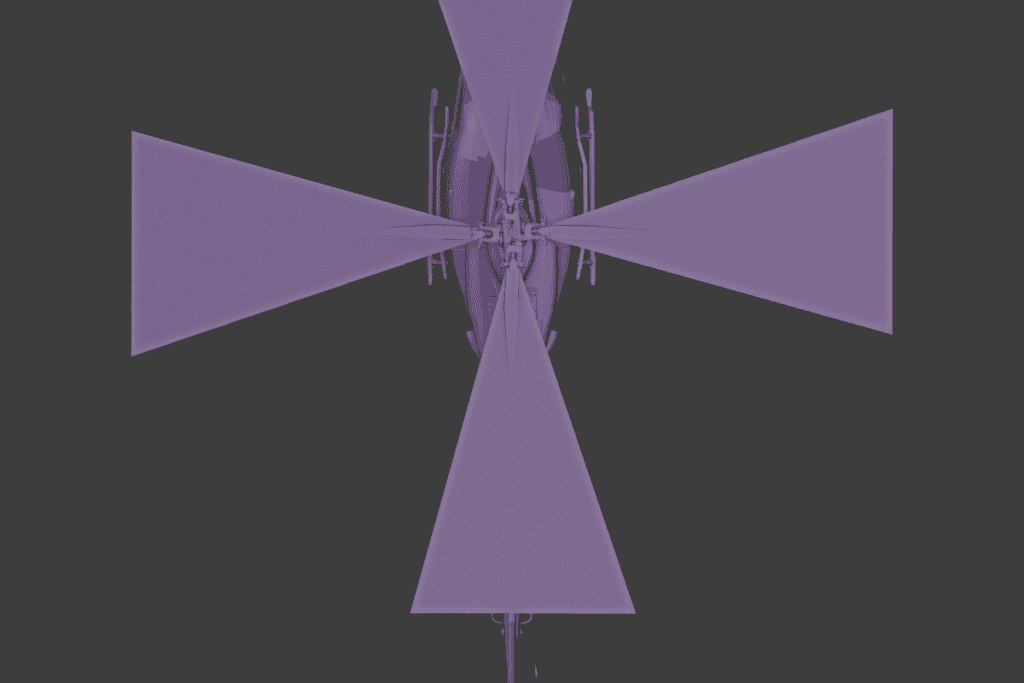
The comparison uses matching orthographic views, plane intersections at 14 longitudinal stations, and one-way nearest-surface measurements from the base to the Area 51 reference. The measurements help identify regions that need inspection. They are not measurements of real-aircraft accuracy, and the section envelopes can include fittings, skids and stabilizers.
The tail and skid regions show larger upper-end deviations in this initial scan. Those differences must be inspected in context: provisional registration, missing details and differences between the reference models can all contribute.
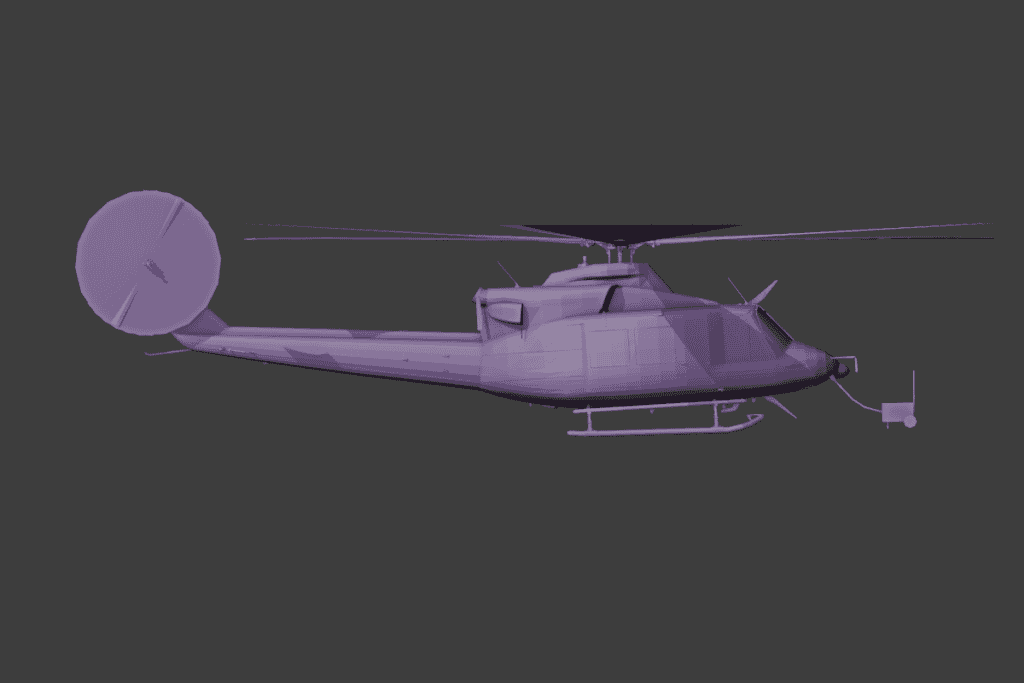
Side views
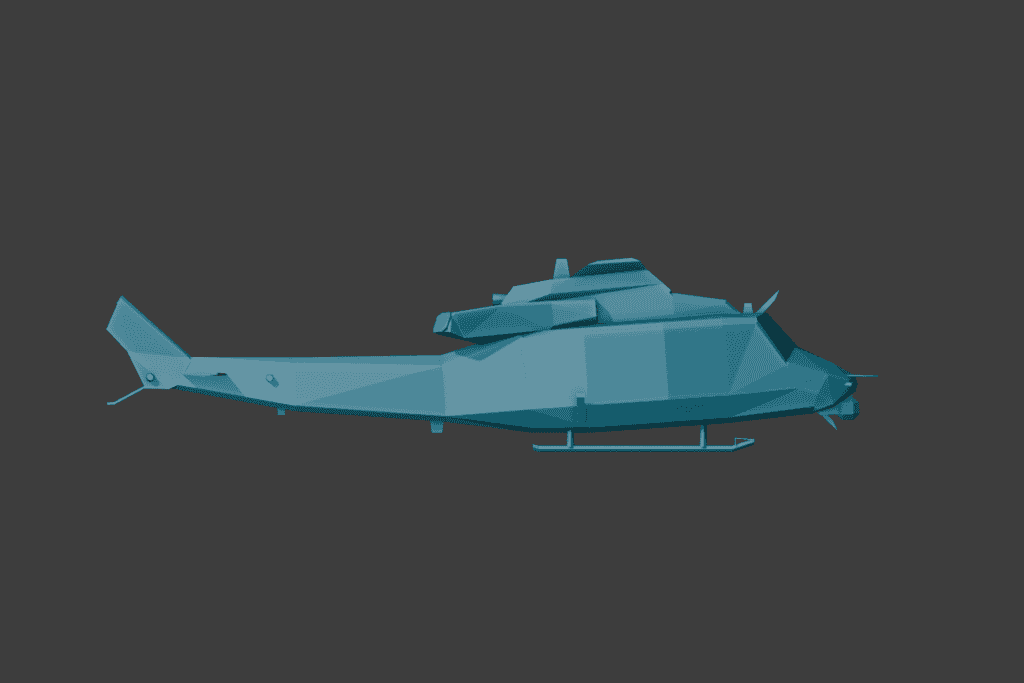
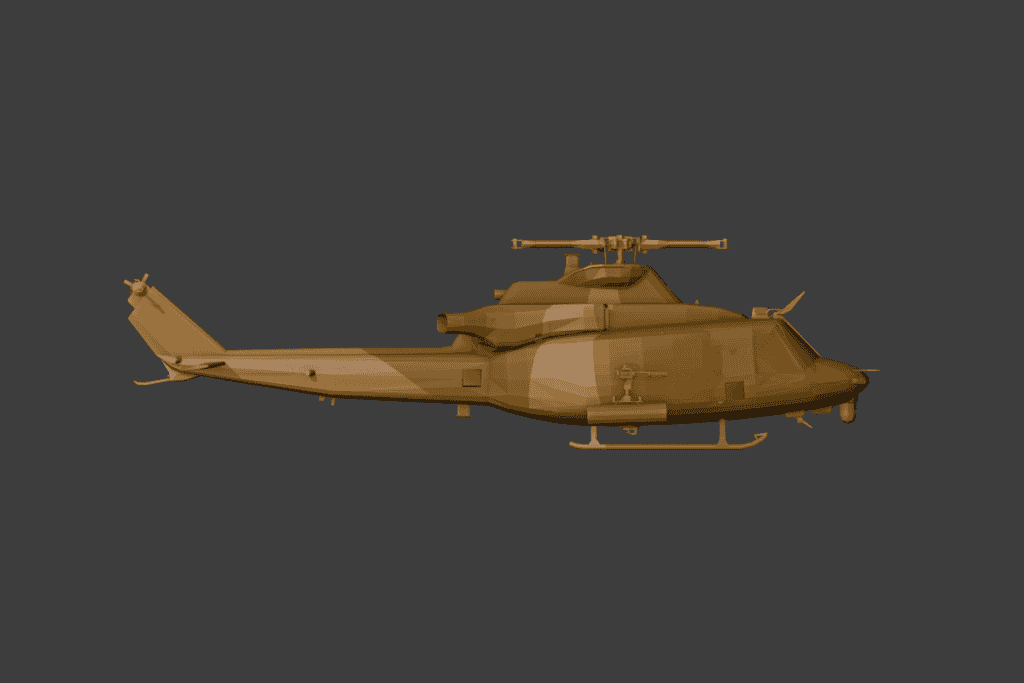
Area 51 UH-1Y reference — side view.
Top views
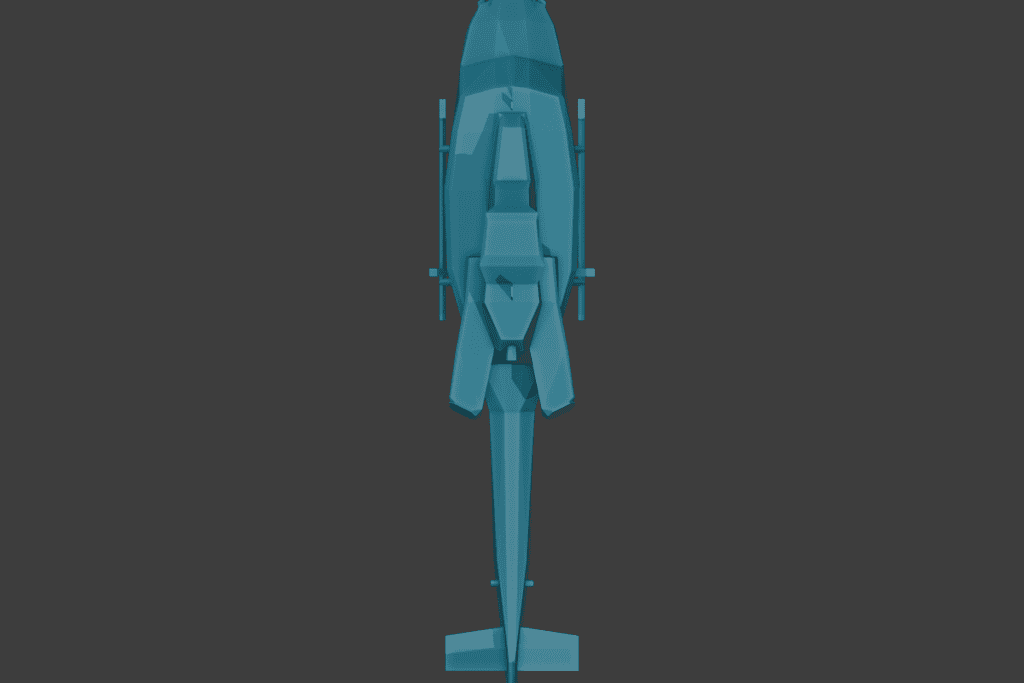
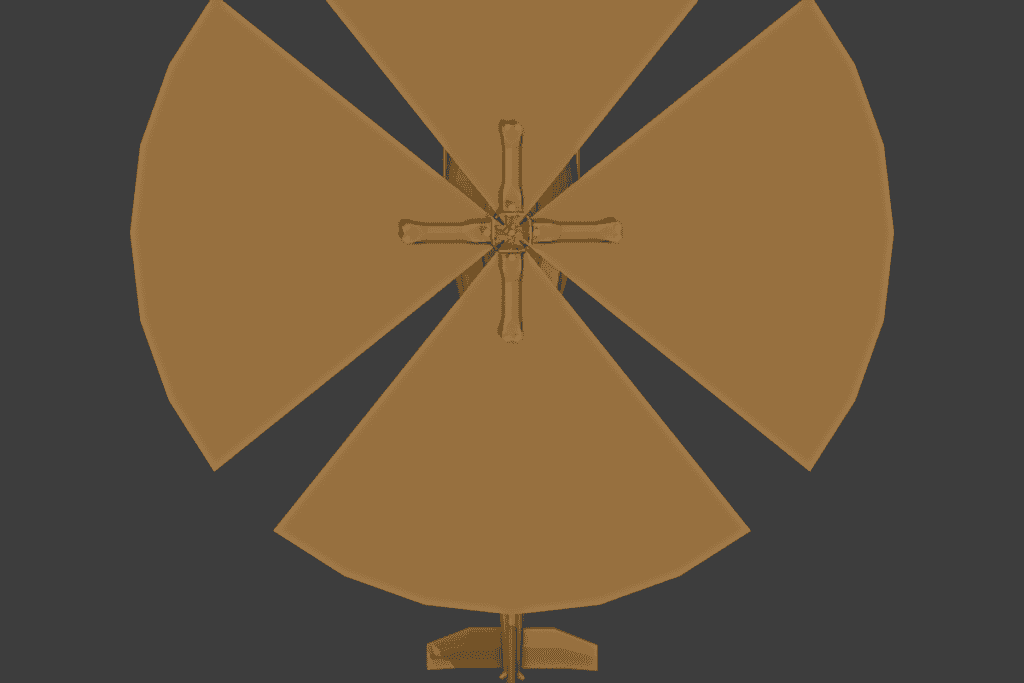
Front views
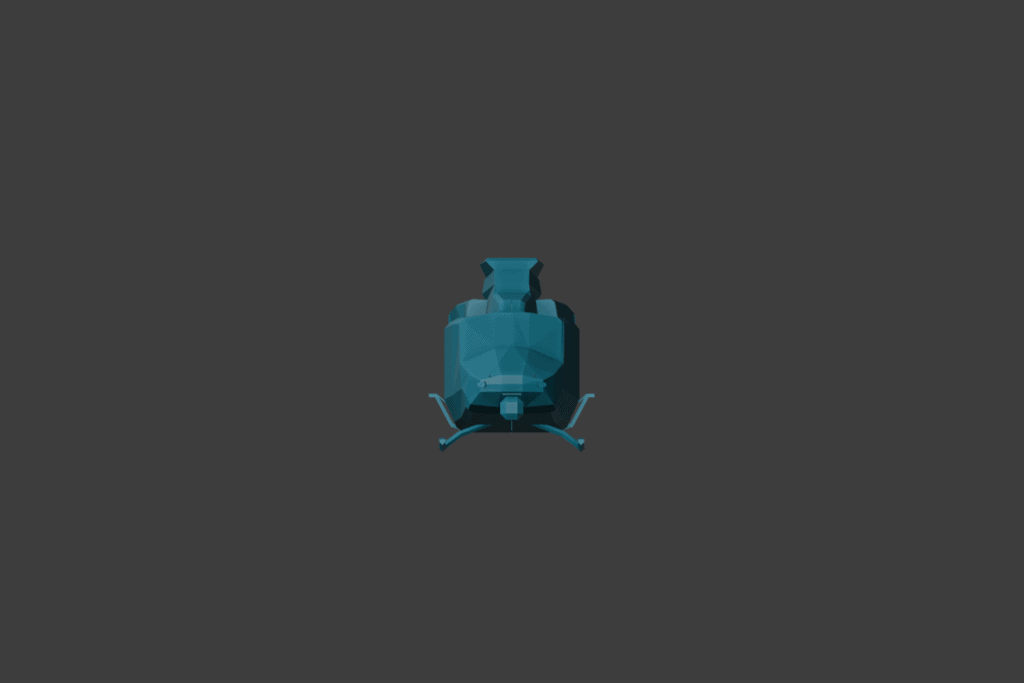
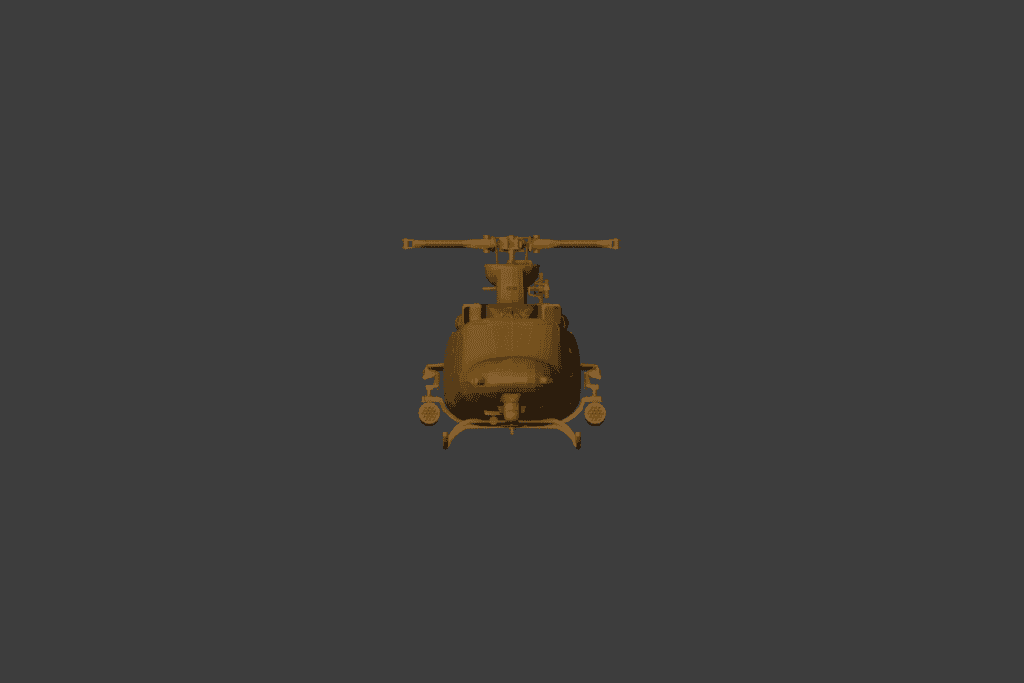
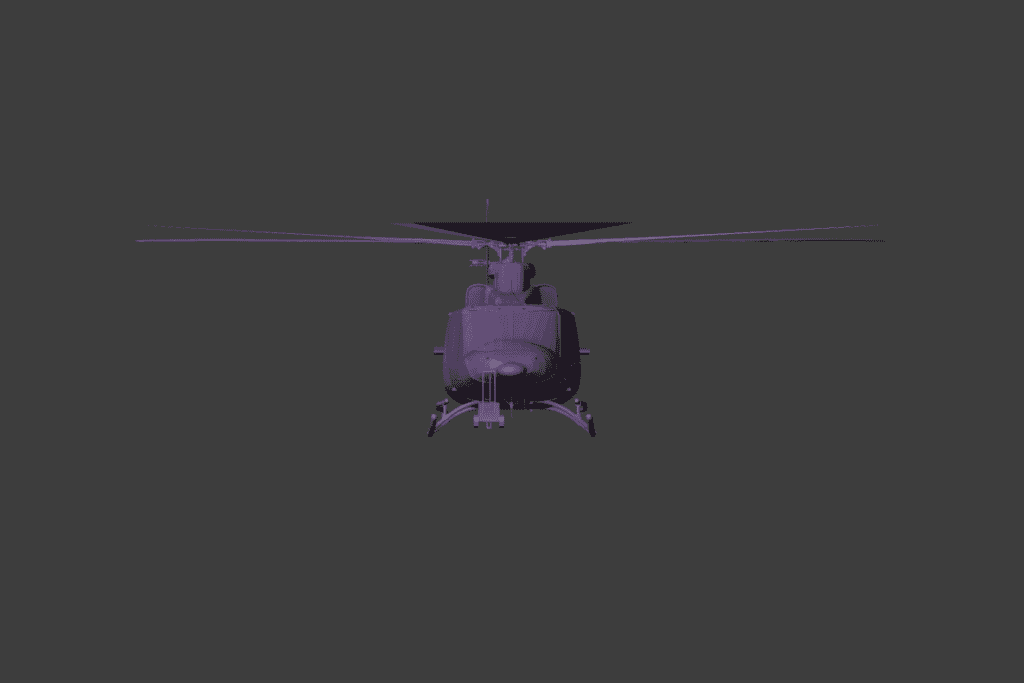
Three-quarter views
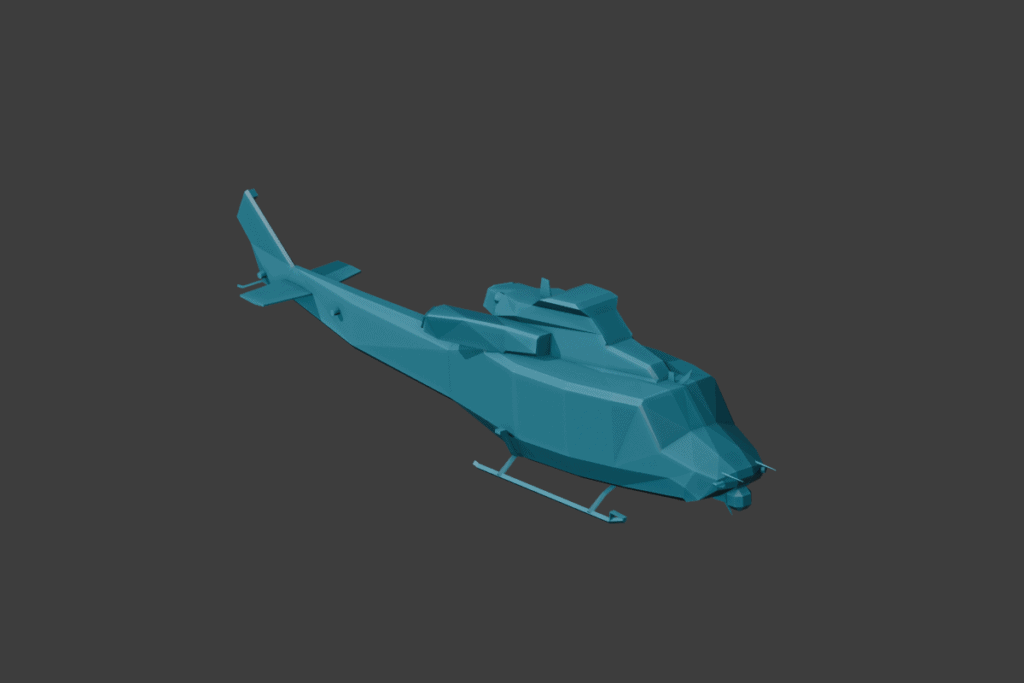
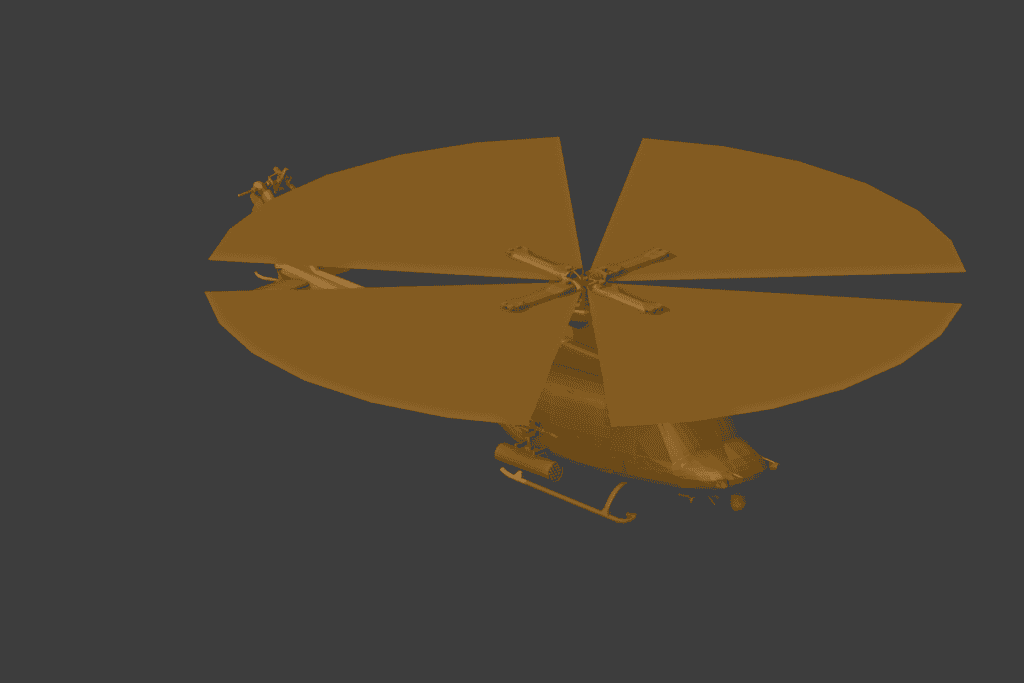
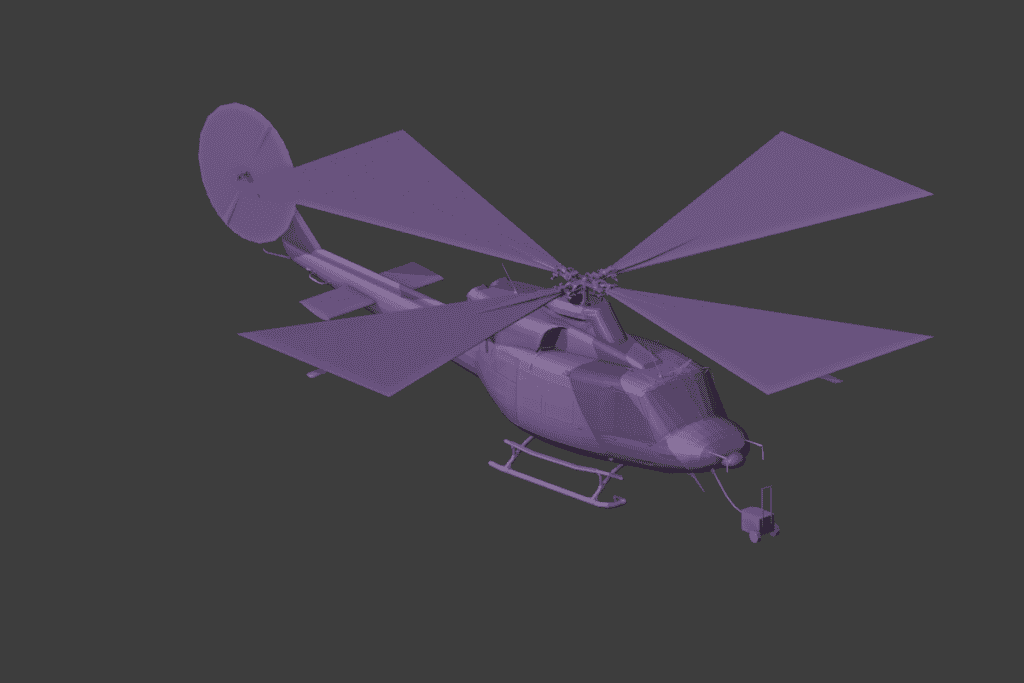
Solid-shaded geometry views do not represent final textures, transparency or simulator appearance.
Initial scan measurements
| Region | Median distance | 95th percentile |
|---|---|---|
| Nose and windshield | 7.0 cm | 16.1 cm |
| Cabin and doors | 10.0 cm | 37.1 cm |
| Engines and transmission | 10.0 cm | 25.2 cm |
| Tail boom | 12.6 cm | 39.5 cm |
| Tail fin region | 13.4 cm | 54.2 cm |
| Skids and steps | 10.0 cm | 56.0 cm |
Distances are diagnostic comparisons to A51 after provisional mast alignment, not real-aircraft tolerances.
Preparing the moving parts
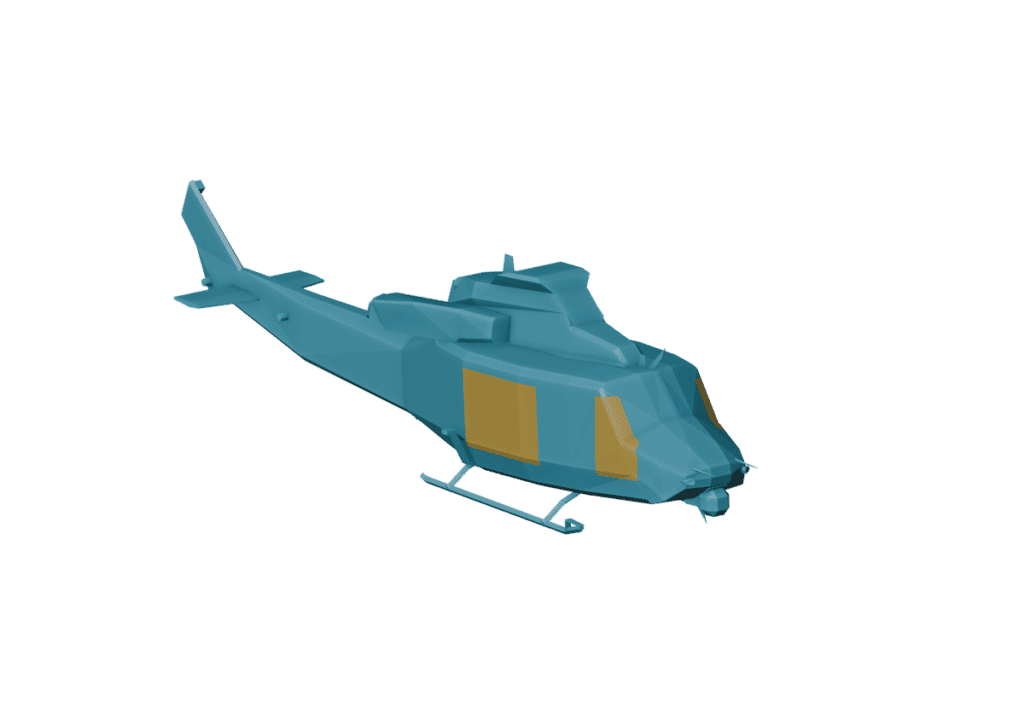
Four panels have been separated from the base: two sliding cabin doors and two hinged cockpit doors. Their provisional outlines follow projected Area 51 door shapes. Each has a separate controller, initial thickness and opening reveals. Closed-state surface checks passed after correcting a cutting issue.
Two original six-barrel minigun blockouts establish the assembly structure: receivers, cradles, mounts, ammunition boxes and independently controlled swivel, elevation and barrel rotation. They are layout and articulation studies, not finished minigun replicas.
Door frames, tracks, hinges, seals, separate glazing, interior surfaces, gun feeds and collision clearance all remain unfinished. Opening the doors now exposes that unfinished interior work.
What comes next
We continue to iterate.
The initial task I gave AI was to come up with a repeatable compare → rebuild → verify process for each section, with a saved checkpoint after each completed pass.
For every section, we will:
- Isolate the corresponding geometry from our base model and our two guide models.
- Align the references using local landmarks and measured dimensions.
- Produce matching views, wireframes, cross-sections, and overlays to identify differences in shape and detail.
- Rebuild our geometry, then check its silhouette, clearances, shading, UVs, and polygon cost.
- Export and verify the compiled model before moving on.
The next pass will refine the nose, windshield and cabin shell against the UH-1Y reference. Door apertures will then be refitted to the improved contours before detailing their frames and mechanisms. The simulator load-test prototype remains separate from these unfinished geometry checkpoints.
Stay Tuned for Updates
Who knows how effective this approach might be. Based on recent experience with my other CH-53E model, I believe it will certainly result in a decent, low-poly AI, if nothing else. But I would be disappointed in that. I’d like to think we can exceed what we already have, which is just a 20-year old FSX model – I really want to create something on the level of Miryadi’s MV-22 in terms of quality freeware.
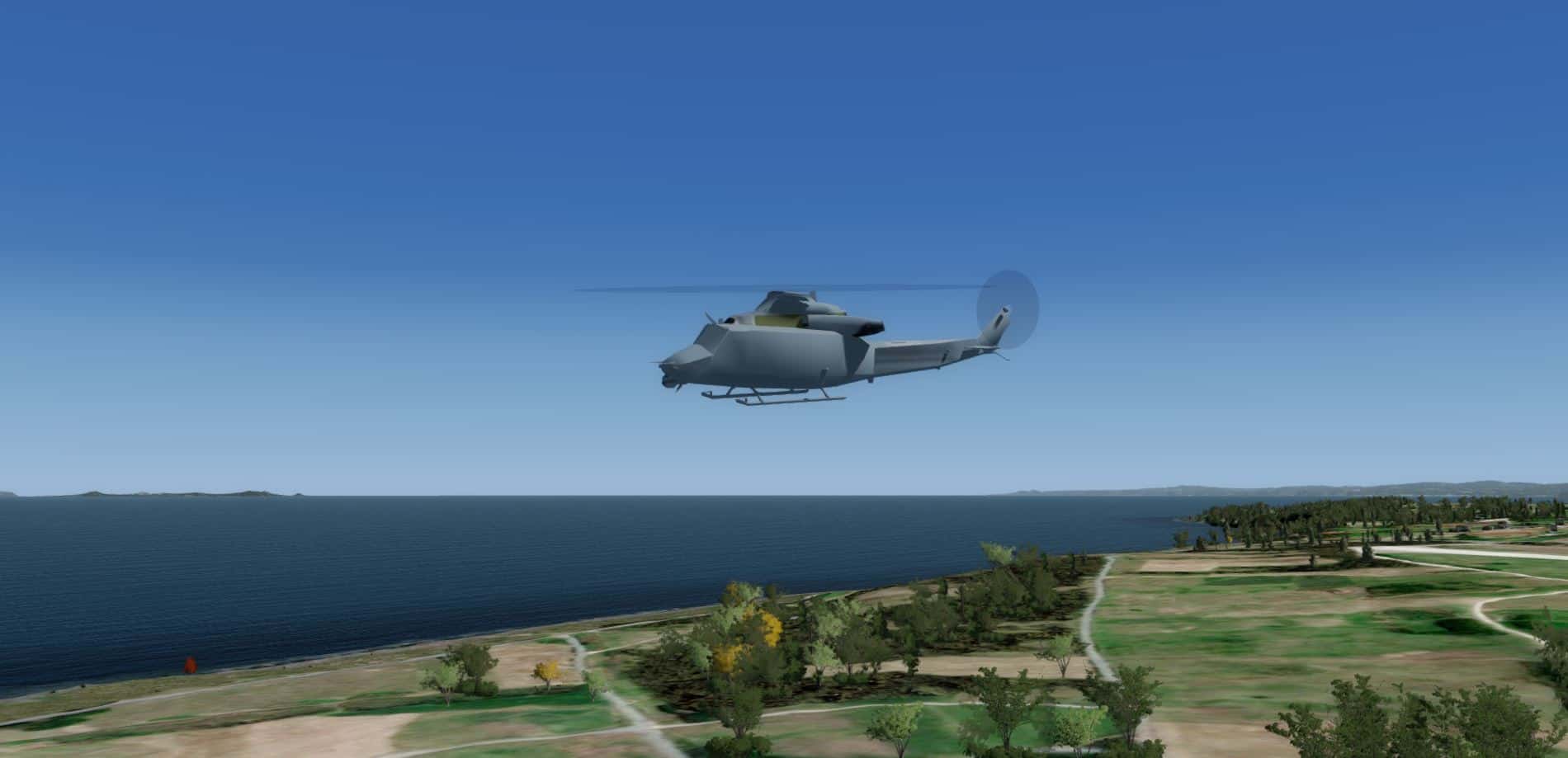
Quick note: Already got this ugly block flying in the sim. More to come.